
How Can You Maximize Bearing Performance and Reduce Downtime?
The most effective ways to improve bearing performance and reduce downtime are proper lubrication, contamination control, correct bearing selection, precision installation, routine inspections, and predictive maintenance technologies. When these best practices are followed, bearings last longer, equipment reliability improves, and costly unplanned failures are significantly reduced.
Why Bearing Performance Matters
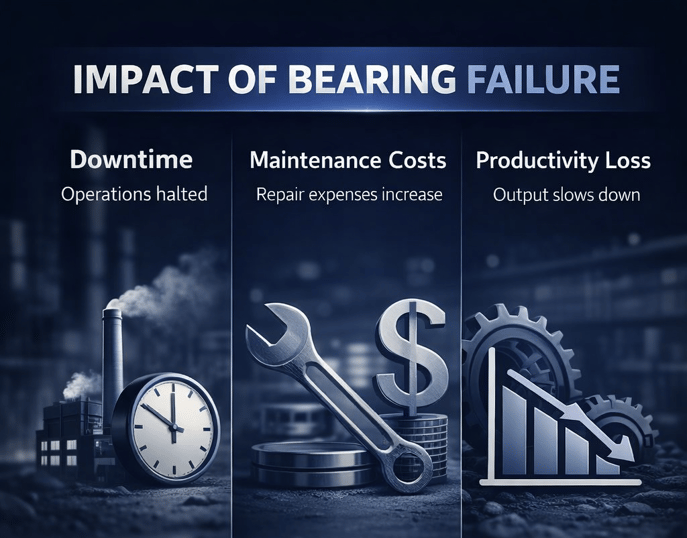
- Production delays and lost revenue.
- Higher maintenance costs due to emergency repairs.
- Reduced equipment lifespan, impacting long-term ROI.
Common Causes of Bearing Underperformance
- Improper lubrication – Too much, too little, or the wrong type of lubricant.
- Contamination – Dirt, moisture, and debris can quickly degrade bearing surfaces.
- Misalignment – Incorrect installation or shaft misalignment increases stress.
- Overloading – Bearings designed for lighter loads can fail under excessive pressure.
What Are the Signs of Bearing Failure?
Common warning signs that a bearing may be approaching failure include:
- Excessive vibration
- Increased operating temperature
- Unusual noise or grinding sounds
- Lubricant leakage
- Shaft misalignment
- Visible corrosion or contamination
Identifying these symptoms early can help maintenance teams schedule repairs before catastrophic equipment failure occurs.
What Bearing Type Is Best for My Application?
The best bearing depends on the operating conditions.
- Ball Bearings: High speed, moderate loads.
- Roller Bearings: Heavy radial loads.
- Angular Contact Bearings: Combined radial and axial loads.
- Thrust Bearings: Primarily axial loads.
- Spherical Roller Bearings: Misalignment and heavy loads.
- Ceramic Hybrid Bearings: High speed and elevated temperatures.
Choosing the correct bearing type improves service life, energy efficiency, and equipment reliability.
How to Choose the Right Bearing for Your Application
- Load Requirements: For heavy radial loads, consider roller bearings. For applications with significant axial loads, thrust bearings are ideal. Mixed load conditions often require angular contact bearings.
- Speed: For high-speed machinery, precision ball bearings or ceramic hybrid bearings are recommended. Ensure proper lubrication systems are in place to reduce friction and heat buildup.
- Operating Environment: In harsh or contaminated environments, opt for sealed bearings or those with special coatings for corrosion resistance. For high-temperature applications, choose bearings with heat-treated steel or ceramic components.
- Maintenance Capabilities: If maintenance access is limited, consider sealed-for-life bearings. For applications where predictive maintenance is possible, smart bearings with sensors can provide real-time performance data.
- Application-Specific Requirements: For food and beverage, select stainless steel bearings with FDA-approved lubricants. For mining or construction, choose heavy-duty bearings with reinforced seals. For robotics or aerospace, prioritize lightweight, high-precision bearings.
How Innovations are Driving Better Performance
-
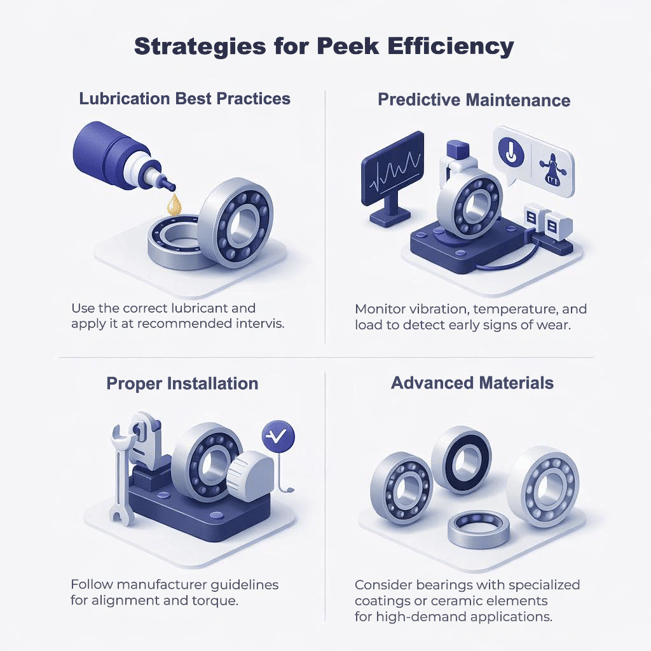
Smart Bearings with IoT Sensors: These bearings provide real-time data on temperature, vibration, and load conditions. By continuously monitoring performance, they enable predictive maintenance, helping distributors and end-users prevent failures before they occur and optimize lubrication schedules.
-
AI-Powered Predictive Maintenance: Artificial intelligence analyzes sensor data to predict wear patterns and potential failures. This reduces unplanned downtime and extends bearing life, making maintenance more efficient and cost-effective.
-
Advanced Materials and Coatings: Bearings with ceramic components or specialized coatings offer superior resistance to heat, corrosion, and wear. This is especially valuable in high-speed or harsh environments, where traditional bearings would degrade quickly.
-
Sustainable Solutions: Eco-friendly lubricants and recyclable bearing materials are becoming standard. These innovations not only reduce environmental impact but also improve performance by minimizing contamination and maintaining consistent lubrication properties.
Frequently Asked Questions About Bearing Performance
What causes bearings to fail prematurely?
The most common causes of premature bearing failure are improper lubrication, contamination, misalignment, incorrect mounting, overloading, and excessive operating temperatures.
How often should bearings be lubricated?
Lubrication intervals vary by application, operating speed, load, and environmental conditions. Manufacturers typically provide recommended schedules based on bearing type and operating requirements.
Can predictive maintenance extend bearing life?
Yes. Predictive maintenance technologies such as vibration analysis, temperature monitoring, and smart bearing sensors help identify problems before failure occurs, reducing downtime and extending bearing life.
What is the biggest cause of bearing damage?
Contamination is one of the leading causes of bearing damage. Dirt, moisture, and airborne particles can quickly degrade internal surfaces and reduce bearing life.
How do I know if I selected the wrong bearing?
Signs of incorrect bearing selection include excessive heat, vibration, premature wear, frequent relubrication requirements, and shortened service life.
Maximizing bearing performance is no longer just about routine maintenance—it’s about leveraging technology and innovation to stay ahead. By understanding common failure points, implementing best practices, and embracing new solutions, distributors can deliver exceptional value to their customers and strengthen their competitive edge.
.png?width=400&height=92&name=Copy%20of%20Copy%20of%20Clearance%20(6).png)
Why Work with BDS for Bearing Performance Solutions?
For more than 40 years, Bearing & Drive Systems (BDS) has helped distributors, OEMs, MRO facilities, and aerospace customers solve bearing challenges. From sourcing hard-to-find bearings to bearing modifications, technical support, relubrication services, and inventory solutions, our team helps customers improve reliability and reduce downtime across critical applications.