

What Is a Linear Shaft and Why Is It Important?
A linear shaft is a hardened, precision-ground rod that guides linear bearings and supports smooth, accurate motion in automation, manufacturing, medical equipment, packaging machinery, and aerospace applications. The shaft serves as the running surface for the bearing, making shaft quality directly responsible for system accuracy, load capacity, service life, and overall performance.
Selecting the correct shaft diameter, material, support method, and surface treatment helps reduce deflection, minimize wear, and improve equipment reliability.
When engineers think about linear motion, bearings often take center stage. But behind every smooth, accurate movement is a component doing just as much heavy lifting—the linear shaft. Precision shafting isn’t just a support structure; it’s the backbone of performance, accuracy, and longevity in linear motion systems.
From automated packaging lines to medical equipment and aerospace applications, the right linear shaft can mean the difference between consistent motion and costly downtime.
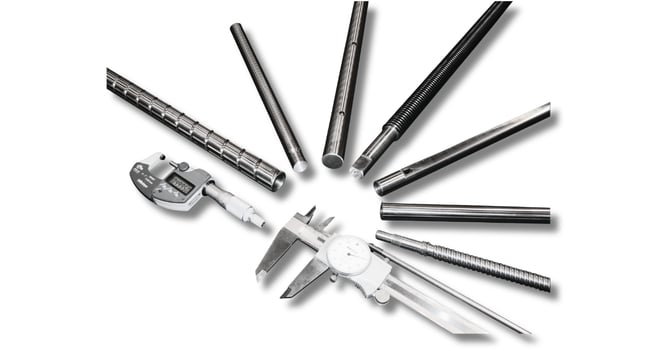
Simply put: a better shaft delivers better motion.
When shaft quality is overlooked, even the highest-quality bearings can suffer from premature wear, vibration, or misalignment.
How Do Linear Shafts Work?
Linear shafts provide the precision-guided pathway that allows linear bearings to move smoothly and accurately in a straight line. While bearings often receive most of the attention in a linear motion system, the shaft itself serves as the running surface that directly influences accuracy, load capacity, speed, and service life.
In a typical linear motion assembly, a linear bearing rides along the surface of a hardened, precision-ground shaft. As the bearing travels, rolling elements such as balls or rollers circulate within the bearing and maintain consistent contact with the shaft. This rolling action dramatically reduces friction compared to sliding surfaces, enabling smooth movement with minimal resistance.
Because the shaft acts as the bearing's raceway, its quality is critical. Even small imperfections in straightness, surface finish, or hardness can create vibration, increased friction, positioning errors, and premature bearing wear. A high-quality shaft provides a smooth, consistent surface that allows the bearing to maintain precise motion throughout its travel.
The Role of Shaft Hardness
Linear shafts are typically manufactured from hardened steel, stainless steel, or specialty materials designed to resist wear and deformation. The hardened surface prevents damage caused by the constant rolling contact of the bearing elements.
If a shaft is too soft, grooves and wear patterns can develop over time. Once surface damage occurs, bearing performance deteriorates rapidly, leading to reduced accuracy, noise, and shortened service life.
The Importance of Straightness
One of the most important characteristics of a linear shaft is straightness. Bearings are designed to follow the path created by the shaft. If the shaft contains bows, bends, or misalignment, the bearing must compensate as it travels, increasing load on the rolling elements and creating unwanted stress throughout the system.
In applications such as CNC machinery, robotics, automation equipment, and medical devices, maintaining shaft straightness is essential for accurate positioning and repeatable movement.
How Shaft Support Affects Performance
The way a shaft is mounted has a significant impact on system performance.
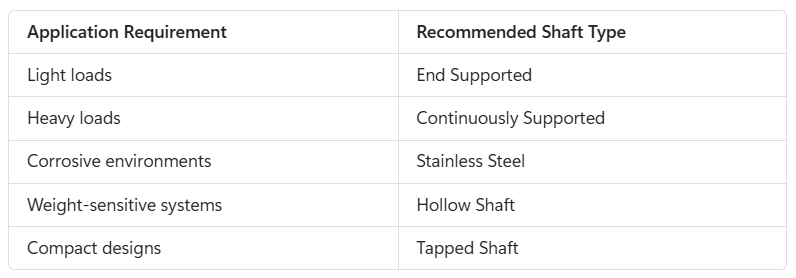
End-supported shafts are secured only at each end and are commonly used in lighter-duty applications with shorter travel distances. While they offer a simple and economical design, excessive loads can cause shaft deflection.
Continuously supported shafts are mounted along their entire length using a support rail or base. This design greatly reduces deflection and is preferred for heavier loads, longer travel distances, and applications requiring maximum precision.
Selecting the proper support method helps maintain system accuracy, evenly distribute loads, and extend bearing life.
How Linear Shafts and Bearings Work Together
A linear motion system is only as strong as its weakest component. Even the highest-quality linear bearing cannot compensate for a poorly selected or improperly supported shaft.
For optimal performance:
- The shaft diameter must support the expected load.
- The shaft material must match the operating environment.
- Surface hardness must withstand continual rolling contact.
- Straightness must meet accuracy requirements.
- Support methods must minimize shaft deflection.
When these factors are properly matched, linear shafts and bearings work together to provide smooth motion, accurate positioning, reduced maintenance requirements, and long-term reliability.
Why Shaft Quality Matters
Linear shafts may appear to be simple components, but they are one of the most important elements in any linear motion system. The shaft determines how accurately a bearing can travel, how much load the system can handle, and how long the assembly will operate before requiring maintenance or replacement. Investing in high-quality precision shafting helps improve equipment reliability, reduce downtime, and maximize overall system performance.
Quick Answer
 Types of Linear Shafts
Not all linear shafts are created equal. Choosing the right configuration depends on load requirements, mounting constraints, and application environment.
• Tapped Shafts
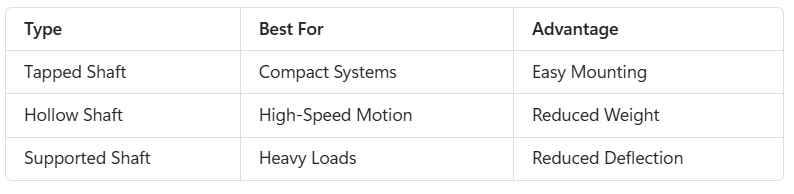
Tapped shafts feature internal threads on one or both ends, allowing easy mounting to threaded studs without the need for continuous shaft support. Ideal for compact systems and lighter loads.
• Threaded Shafts
Threaded shafts can be mounted directly into tapped holes in machine frames or plates. Like tapped shafts, they typically do not require additional shaft support.
• Hollow Shafts
Hollow linear shafts reduce overall system weight while maintaining rigidity. These are especially useful in high-speed or weight-sensitive applications where inertia matters.
Linear Shaft Types Comparison
Materials & Coatings: Matching the Environment
Linear shaft materials and surface treatments should align with both the application and operating environment.
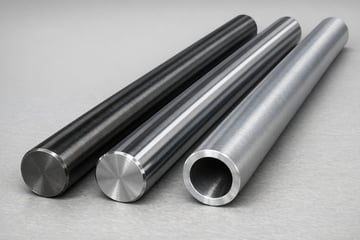 Common Shaft Materials
- Alloy Steel: High strength durability for demanding industrial applications
- Stainless Steel: Corrosion-resistant for washdown, food processing, medical environments
- Aluminum: Light, corrosion-resistant, often with specialized coatings
Surface Treatments & Hardening
Precision-ground and hardened surfaces improve wear resistance and extend bearing life. Coatings can also enhance corrosion resistance and reduce friction, making them essential in harsh or specialized environments.
How Do You Choose the Right Linear Shaft?
Custom Machining: When Standard Isn’t Enough
Many motion systems require more than off-the-shelf shafting. Custom machining options—such as grooves, snap-ring channels, special tolerances, or cut-to-length shafts—allow engineers to optimize performance without redesigning entire assemblies.
This flexibility is especially valuable when retrofitting existing equipment or designing around space constraints.
Why Precision Shafting Deserves More Attention
Linear shafts may not be the most visible component in a motion system, but they play a central role in:
- System accuracy and repeatability
- Bearing life and reliability
- Load distribution and deflection control
- Overall equipment uptime
Investing in the right shaft from the start reduces maintenance, improves efficiency, and protects your bearing investment.
What Causes Linear Shaft Failure?
Linear shafts are designed to provide accurate, repeatable motion for years of reliable service. However, improper selection, installation issues, environmental factors, and maintenance deficiencies can lead to premature wear and system failure. Understanding the most common causes of shaft damage can help improve equipment reliability, reduce downtime, and extend bearing life.
Shaft Deflection
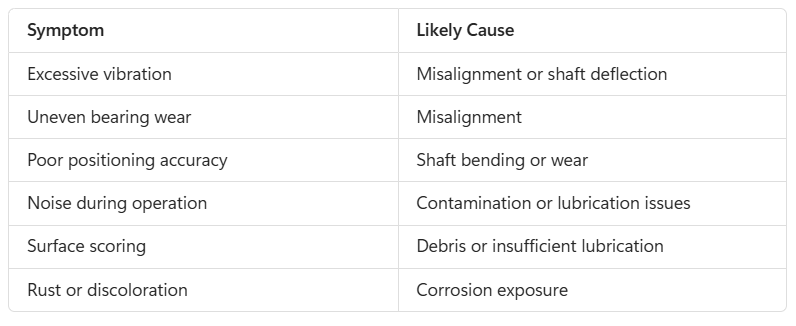
One of the most common causes of linear shaft failure is excessive deflection. Deflection occurs when a shaft bends under load, causing uneven stress on the shaft and bearing assembly.
Symptoms of shaft deflection include:
- Reduced positioning accuracy
- Uneven bearing wear
- Increased vibration
- Premature component failure
Long unsupported spans, undersized shaft diameters, and loads that exceed system design limits can all contribute to shaft deflection.
Misalignment
Linear bearings are designed to travel along a precise path. When shafts are improperly aligned during installation, bearings experience uneven loading and increased friction.
Common causes of misalignment include:
- Improper mounting surfaces
- Installation errors
- Machine frame distortion
- Settling or shifting of equipment over time
Even minor misalignment can lead to increased bearing wear, reduced accuracy, and shortened service life.
Surface Damage and Contamination
The shaft surface acts as the bearing raceway. Damage to this precision-ground surface directly impacts bearing performance.
Common sources of damage include:
- Dirt and debris
- Metal chips
- Abrasive contaminants
- Improper handling during installation
Scratches, dents, and contamination can disrupt smooth bearing travel and create stress concentrations that accelerate wear.
Insufficient Lubrication
Proper lubrication reduces friction between the bearing elements and the shaft surface. When lubrication schedules are ignored or the wrong lubricant is used, metal-to-metal contact can occur.
Insufficient lubrication can cause:
- Increased friction
- Excessive heat generation
- Accelerated wear
- Reduced bearing and shaft life
Following manufacturer lubrication guidelines is essential for maintaining reliable performance.
Corrosion and Environmental Exposure
Moisture, chemicals, and harsh operating environments can attack shaft surfaces and compromise performance.
Applications exposed to:
- Washdown environments
- High humidity
- Chemical processing
- Outdoor conditions
may require stainless steel shafting or specialized surface treatments to prevent corrosion and maintain accuracy.
Improper Shaft Material Selection
Not all shaft materials are suitable for every application. Selecting a material that does not match operating conditions can result in reduced performance and premature failure.
For example:
- Standard carbon steel may corrode in wet environments.
- Softer materials may wear quickly under heavy loads.
- Lightweight materials may not provide adequate rigidity for demanding applications.
Matching the shaft material to the application's load, speed, and environmental requirements is critical.
How to Prevent Linear Shaft Failure
Many shaft failures can be avoided through proper system design and maintenance practices.
Best practices include:
- Selecting the correct shaft diameter and material
- Providing adequate shaft support
- Maintaining proper alignment
- Following lubrication schedules
- Protecting systems from contamination
- Performing routine inspections for wear and corrosion
By addressing these factors early, manufacturers can improve motion accuracy, extend component life, and reduce costly downtime.
Linear Shaft Failure Systems & Likely Causes
Quick Answer
Most linear shaft failures are caused by deflection, misalignment, contamination, inadequate lubrication, corrosion, or improper shaft selection. Choosing the correct shafting solution and following proper maintenance practices can significantly improve system reliability and bearing life.
Linear Shaft FAQs
What is a linear shaft?
A linear shaft is a precision-ground rod used to guide linear bearings and provide smooth linear motion in machinery and automation systems.
What material is best for a linear shaft?
The best material depends on the application. Alloy steel offers high strength, stainless steel provides corrosion resistance, and aluminum reduces system weight.
What is the difference between an end-supported and continuously supported shaft?
End-supported shafts are supported only at their ends and work best for lighter loads. Continuously supported shafts are supported along their entire length and are better for heavier loads and longer travel distances.
Can linear shafts be customized?
Yes. Linear shafts can be manufactured with custom diameters, tapped ends, threading, coatings, machining features, and length modifications to meet specific application requirements.
How do I determine the correct shaft diameter?
Diameter selection depends on load, travel distance, bearing type, shaft support method, and allowable deflection.
What industries commonly use linear shafts?
Linear shafts are frequently used in automation, robotics, packaging machinery, medical devices, aerospace equipment, CNC machines, and material handling systems.
Choosing the Right Linear Shaft for Precision Motion
Linear shafts are a critical component in any linear motion system. The correct combination of shaft type, material, support method, and surface treatment helps maximize bearing life, improve positioning accuracy, and reduce downtime. Whether you're designing new equipment or replacing existing components, understanding the role of shafting is essential for achieving reliable and repeatable performance.
Bearing & Drive Systems supplies precision linear shafting, custom machining services, and application support to help distributors and manufacturers find the right solution for their motion control requirements.
When precision matters, BDS is here to support your application—every step of the way. We offer quick turn around with same day shipping, 100% USA made and a 100% satisfaction guarantee on all workmanship. To learn more, check out our BDS All-in-One Shafting Solutions.
.png?width=477&height=110&name=Copy%20of%20Copy%20of%20Clearance%20(6).png)
Looking to Learn More?
Linear shafts are only one part of a successful linear motion system. To better understand how shafts and bearings work together, check out our companion guide on linear bearings.
➡️ Read: What Are Linear Bearings? Types, Applications & How They Work